Breast cancer cells have receptors, which are proteins in or on the cells that attach to certain substances in the blood, such as estrogen and progesterone, which helps them grow. Treatments that stop these hormones from attaching to these breast cancer cell receptors are called hormone therapy (also called hormonal therapy, hormone treatment, or endocrine therapy). Hormone therapy is one type of systemic therapy, which means it reaches cancer cells anywhere in the body, not just the breasts. Hormone therapy is recommended for women with hormone receptor-positive (ER-positive and/or PR-positive) breast cancers, not for women with hormone-negative tumors.
Breast Cancer Types
- Breast cancers with many hormone receptor cells are called hormone receptor-positive cancers.
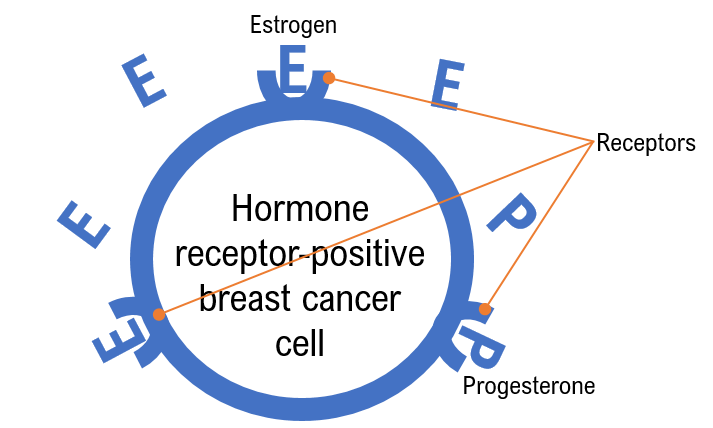
They can attach to the hormones estrogen (estrogen- positive or ER-positive) and/or progesterone (progesterone positive or PR-positive). For these cancers, high estrogen levels help cancer cells grow and spread. About 75% of patients are diagnosed with hormone receptor-positive breast cancer.
-
For ER-positive and PR-positive breast cancers, blocking or slowing estrogen and progesterone from attaching to breast cancer cell receptors can help keep the cancer from growing and spreading.
-
Breast cancers with few or no hormone receptor cells are called hormone receptor-negative cancers. They can be estrogen receptor-negative (ER-negative) and/or progesterone receptor-negative (PR-negative).
Ways hormone therapy slows or stops growth of hormone-sensitive tumors
Hormone therapy slows or stops the growth of hormone-sensitive tumors in two ways:
- By lowering the amount of estrogen in the body. This can be done by blocking ovarian function (i.e., Zoladex and Lupron); or by blocking estrogen production through drugs called aromatase inhibitors (i.e., Arimidex and Femara and Aromasin); and
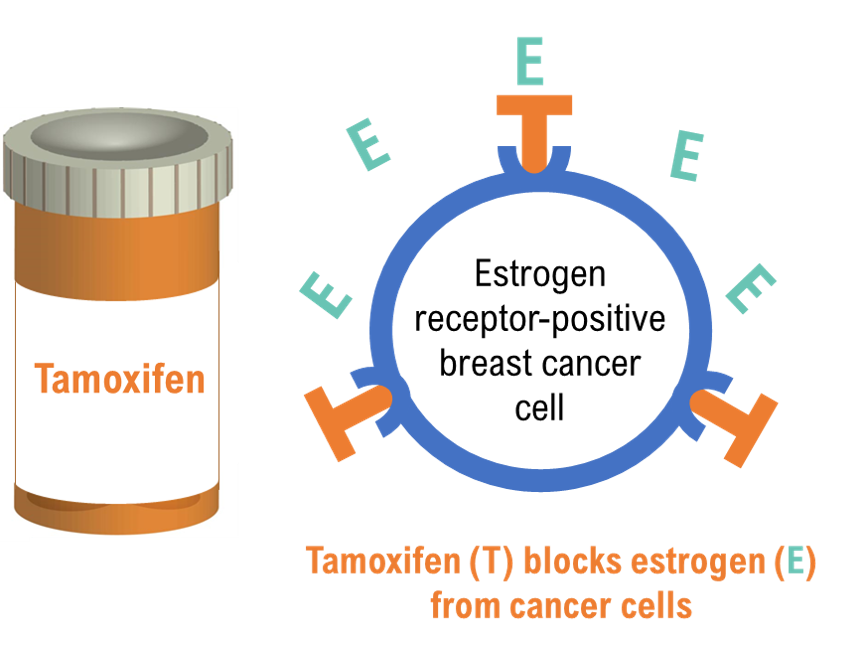
- By blocking the action of estrogen on breast cancer cells (i.e, Novaldex [tamoxifen] and Fareston [toremifene]).
The hormone therapy a doctor prescribes depends on many factors, including disease characteristics, and if you are pre- or post-menopausal.
Sources:
National Cancer Institute, 2023. Treating Breast Cancer. Hormone Therapy for Breast Cancer
American Cancer Society, 2022. Hormone Therapy for Breast Cancer