Some cancer patients find they don’t lose weight during treatment, and some might even gain weight. Weight gain can be a result of cancer treatment in women with breast cancer for many reasons. It could be due to eating more, but being less active. It could also be due to changing hormone levels from your medication. It could also be due to medications that cause your body to hold extra fluid. It could be due to frequent snacking to avoid nausea.
Being overweight or obese increases the risk of breast cancer mortality (death from breast cancer), and overall mortality (death from any cause). Equally important, weight gain or being overweight usually doesn’t make us feel good about ourselves.
It is important to talk to your healthcare team about weight gain in order to find out what may be causing this change. For any of the tips below, talk to your doctor about whether it is safe for you.
Tips for Managing Weight Gain:
- Talk with a Dietitian. Ask your healthcare team for a referral to a registered dietician to help develop a plan to meet your nutrition needs without gaining weight.
- If you meet with a registered dietician, ask him/her to teach you what to look for on nutrition labels so that you can make the healthiest decisions when you’re grocery shopping.
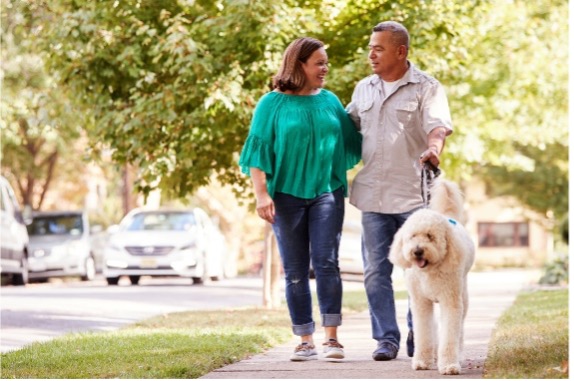
- Walk daily. There are so many ways to add walking to your daily routine.
- When you’re at work, use a bathroom that is in a different building or different floor.
- Walk during your lunch time.
- Walk around your neighborhood after dinner.
- Walk your dog in the morning and before bed; if you don’t have a dog, maybe your neighbor needs help walking his/her dog.
- Don’t text your children to come to the table for dinner. Walk to their rooms to tell them.
- Park furthest away from building entrances.
- If you use the bus, get off one stop early.
- If somewhere you need to go is within walking distance, walk over there instead of driving.
- Form a walking club with your co-workers to help you stay motivated to walk during the workday.
- Wear a pedometer every day so that you see just how much you’re walking. Sometimes just seeing how little or how much you are walking can motivate you to walk more!
-
Maintain a healthy diet.

- Limit food portion sizes, especially with high-calorie foods and at restaurants. Most restaurants have serving sizes that far exceed daily calorie recommendations.
- Instead of red meat, choose a leaner protein such as: fish, chicken, beans, tofu, lentils.
- Choose only whole-grain breads, pastas, and cereals (for example, whole wheat bread instead of white bread, brown rice instead of white rice).
- Choose vegetables and fruits instead of calorie-dense foods. For example, eat apple slices with peanut butter instead of having a slice of apple pie; eat roasted potatoes instead of French fries; order a side of vegetables instead of fried okra. Always be on the lookout for a healthier choice.
- Whether you’re at home or at a restaurant, there are some add-on food items that you should avoid because they are high-calorie, high-fat foods. Here are some common examples: butter and butter sauces, salt, cream cheese, anything fried, adding extra cheese, mayonnaise, tartar sauce, cream sauces, buttermilk, heavy cream, whipped cream.
- Be aware that “low-fat” or “non-fat” does not always mean “low-calorie”.
- See our section on Healthy Eating for all the tips on how to eat healthier. FR4.html
-
Exercise Regularly.
Sources:
American Cancer Society, 2022. Weight Changes.